

This time, a new project takes us to Lower Austria. Together with architect Olga Muskała (büro jutro), we had the opportunity to design the spaces for a general practice. The project was characterized by a unique dynamic: The practice had to open immediately, even though it was clear from the start that a move to larger premises would be necessary soon.
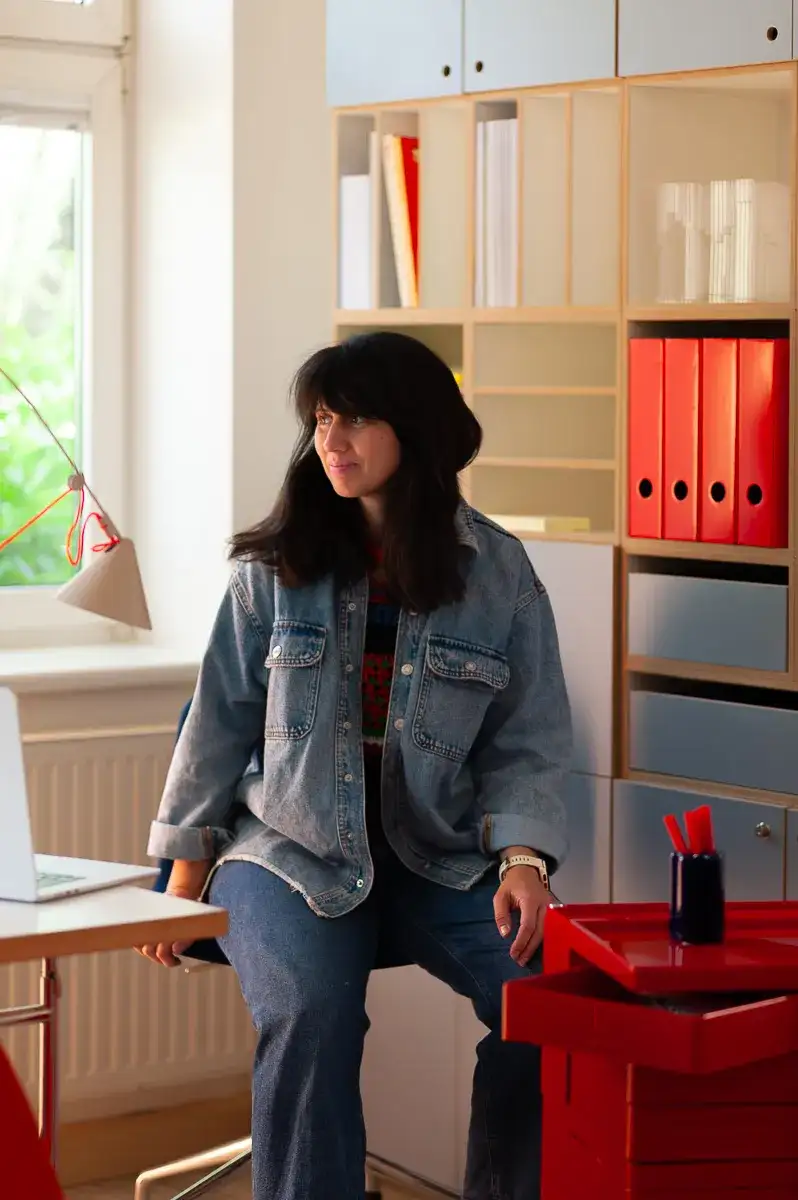
So how do you design an interior that’s intended for change from the very beginning? For Olga, this was the perfect reason to opt for our flexible system rather than custom-built fixtures.
Even after the temporary use, however, the cubes will retain their full value. They will move on to the next location and can be set up there in completely different configurations.
In an interview with stocubo, Olga talks about this exciting project, functional space concepts, and her very personal perspective on durable furniture.
A new doctor, existing space, high expectations: What challenges did you face on this project?
The starting point was exciting: A young doctor with a clear vision for a modern medical practice found herself with existing premises in a rural community that weren’t really suited for that purpose. At the same time, she wanted to restore medical care as quickly as possible. From the very beginning, however, it was also clear that the location would only be a temporary solution and that the practice would eventually need to move to larger premises.
These are exactly the kinds of challenges that interest me as an architect: achieving as much as possible through targeted interventions. That’s why I made many decisions not only with the current situation in mind, but also with an eye toward the future.
The location is temporary. How do you actually plan for something you have to let go of even as you're designing it?
That is precisely where an interesting challenge for architecture lies. Even if a location is only used temporarily, I don’t want to compromise on functionality or design. For the staff, it’s a workplace for years to come, and patients also visit regularly.
That’s why I make decisions that will stand the test of time, even in a future context. Many elements will be moved to the next location and can be repurposed there. In my view, this makes the design more sustainable and adaptable.
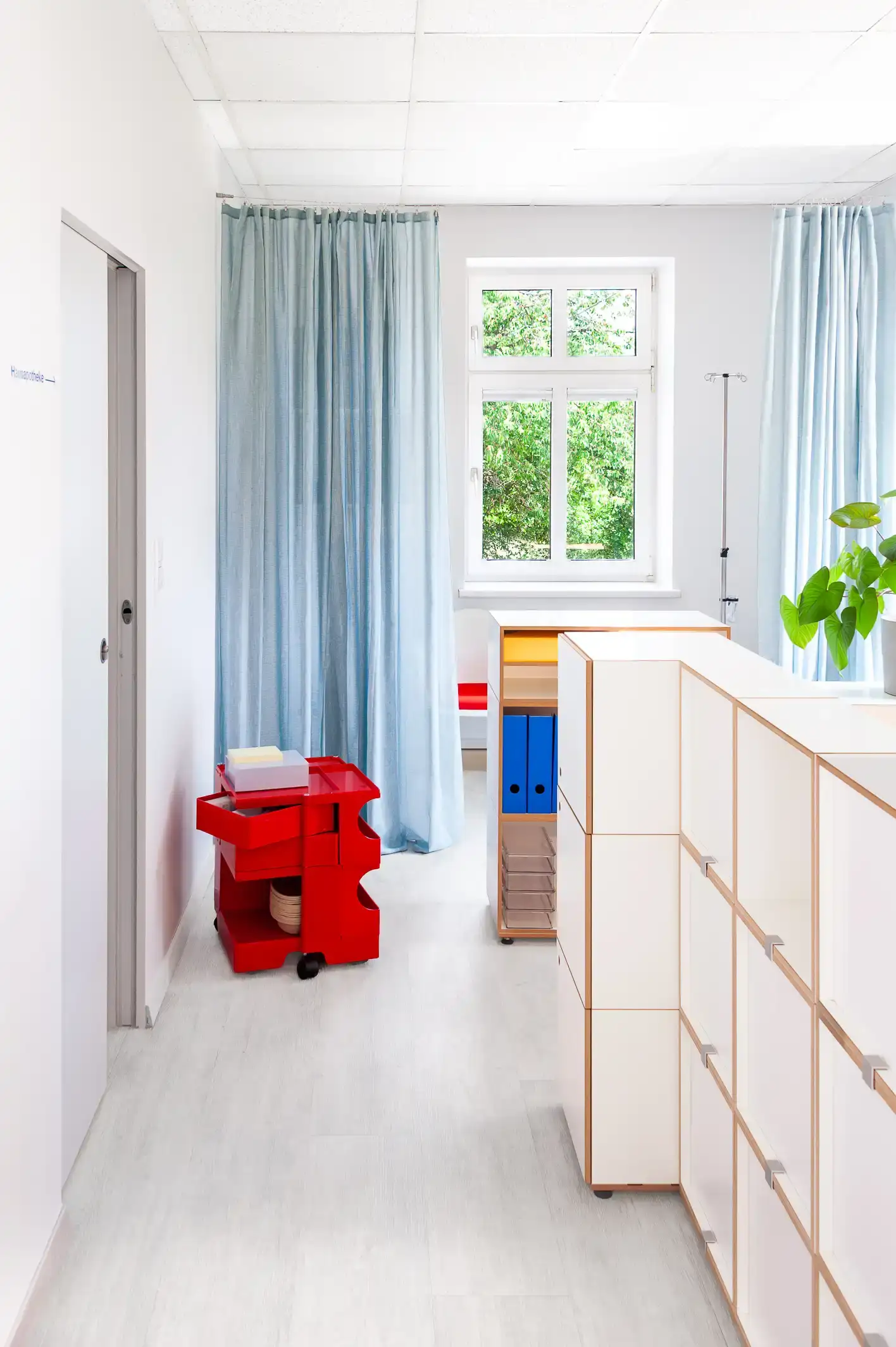
"Although we had planned a lot in advance, we still adjusted individual configurations on-site to better accommodate additional medical equipment. It’s precisely this ability to respond to new requirements that makes modular systems so valuable to me."
What was it like to work with the system? What was your first impression when you held the modules in your hands?
What I liked right away was the simplicity of the system. The modules are easy to understand and, at the same time, surprisingly versatile.
This became particularly interesting during implementation. Although we had planned a lot in advance, we still adjusted individual configurations on-site to better accommodate additional medical equipment. It’s precisely this ability to respond to new requirements that makes modular systems so valuable to me.
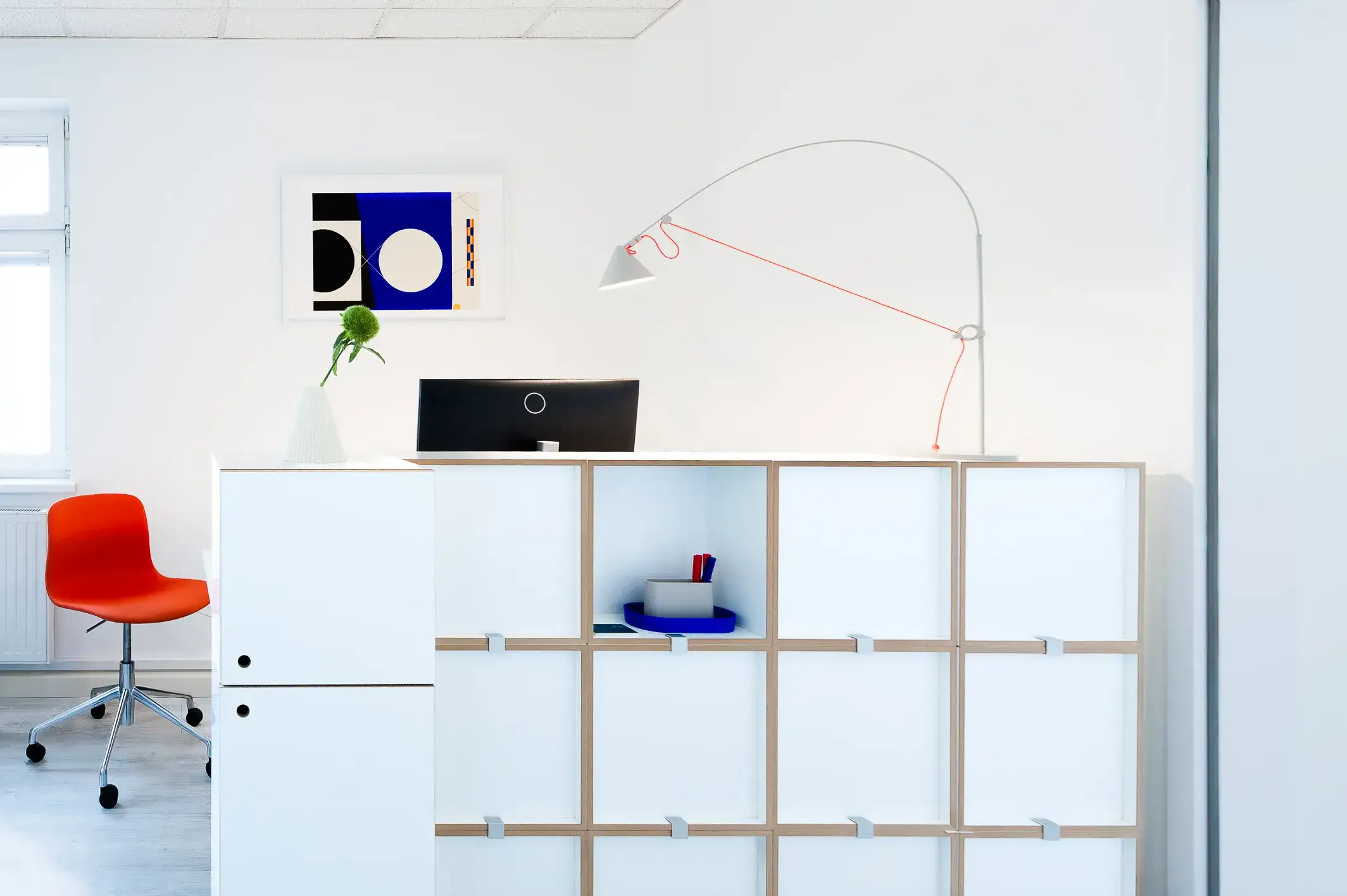
Reception desk and shelf made from the same modules: How did you come to this decision?
That was actually a very logical decision. In my projects, I often try to achieve as much as possible using as few different elements as possible.
For me, the strength of these modules lies in the fact that they can be used for a wide variety of functions. Thanks to their high-quality construction on all sides, we were able to use them both as a reception desk and as storage space. For the staff, this created a private workspace with room for computers, documents, and office supplies. On the patient side, the furniture provides a convenient surface for placing items as well as space for flyers, business cards, or even just a purse.
How did the space change from the first viewing to the final result?
To be honest, my first impression was that the rooms were outdated and, in their current condition, hardly suitable for a modern medical practice.
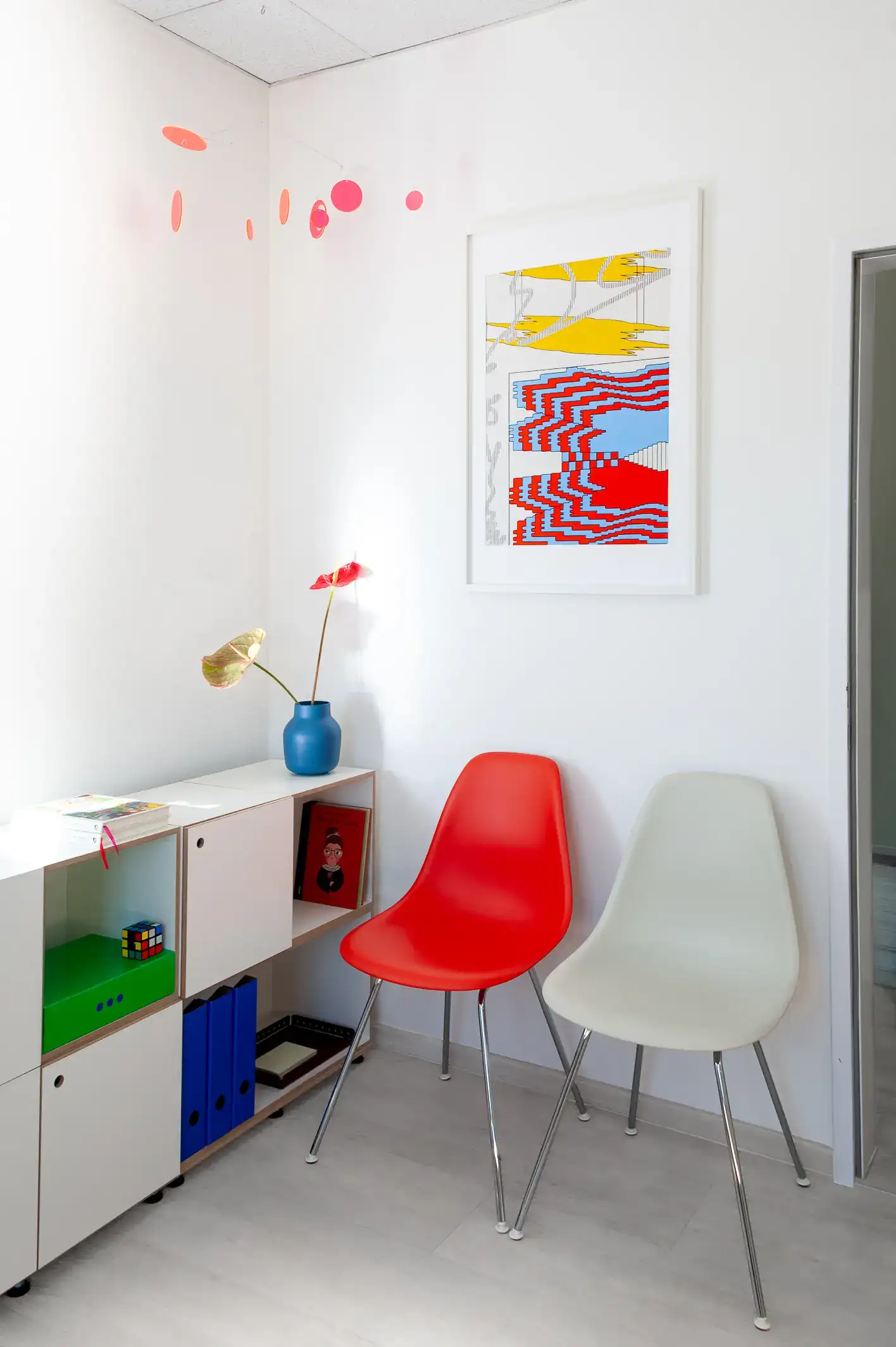
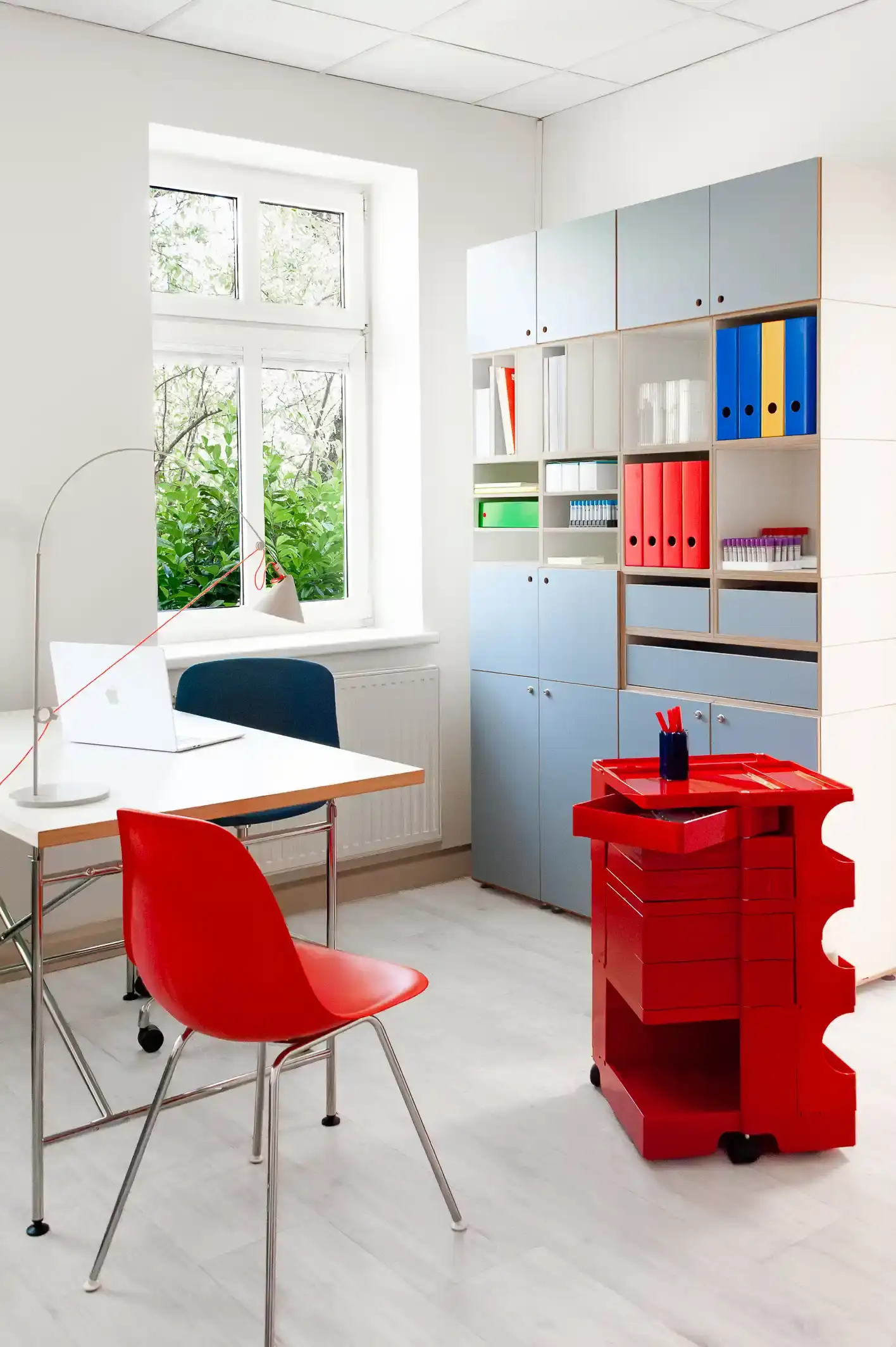
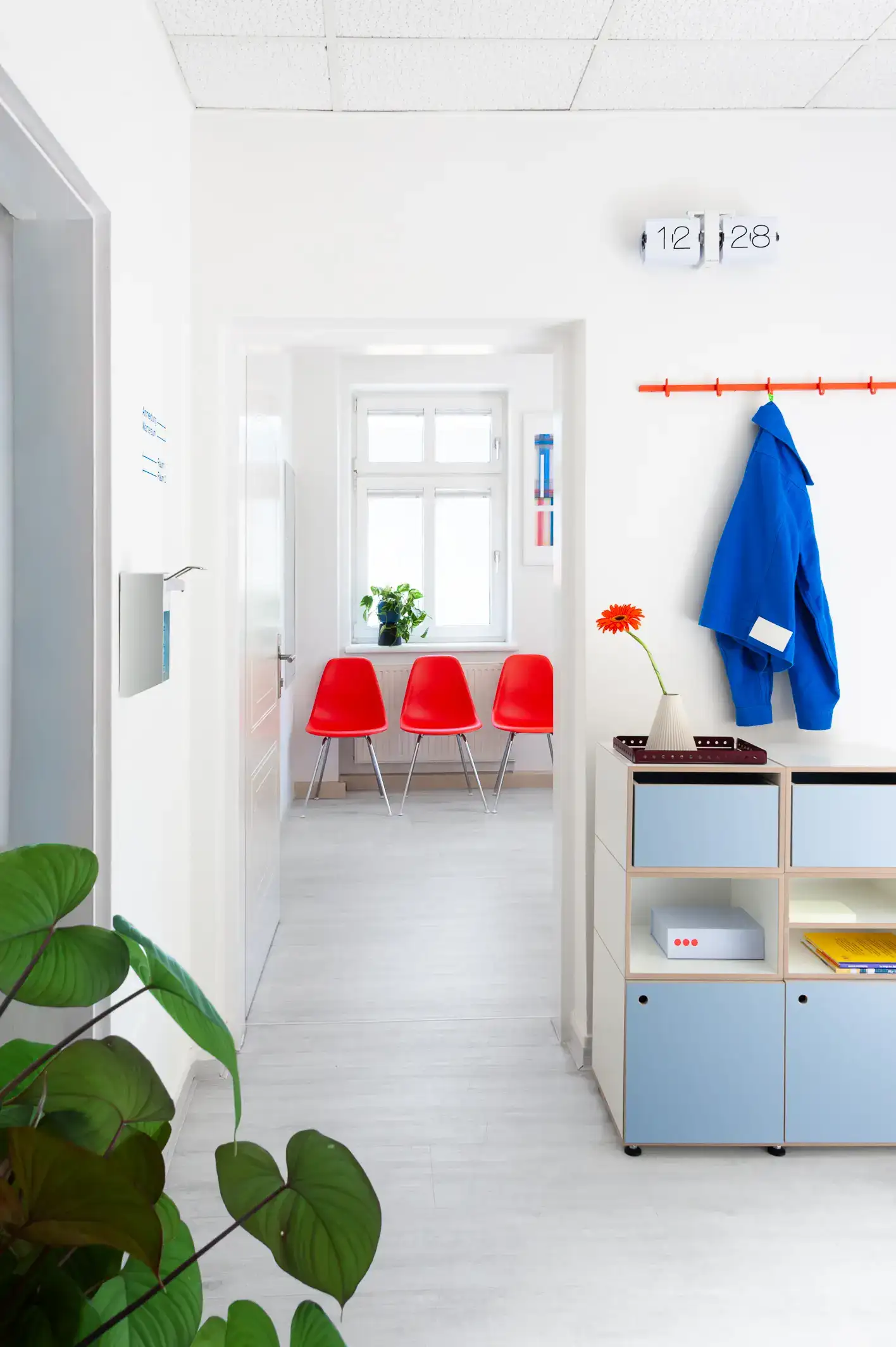
Today, the practice feels bright, lively, and inviting. It was important to me to create a space that is professional but also exudes a certain sense of lightness. I’m especially pleased that children feel comfortable there, too.
At some point, the interior design will move to a new location, taking on a new configuration. What are your thoughts on furniture that evolves with you, and what does that mean for your work as an architect?
To me, furniture isn’t just home furnishings—it’s a resource. That’s why I’m always interested in how long something remains usable and how well it can adapt to change.
As an architect, I’m increasingly trying to design systems rather than finished end states. This creates more possibilities in the long run and reduces resource consumption.
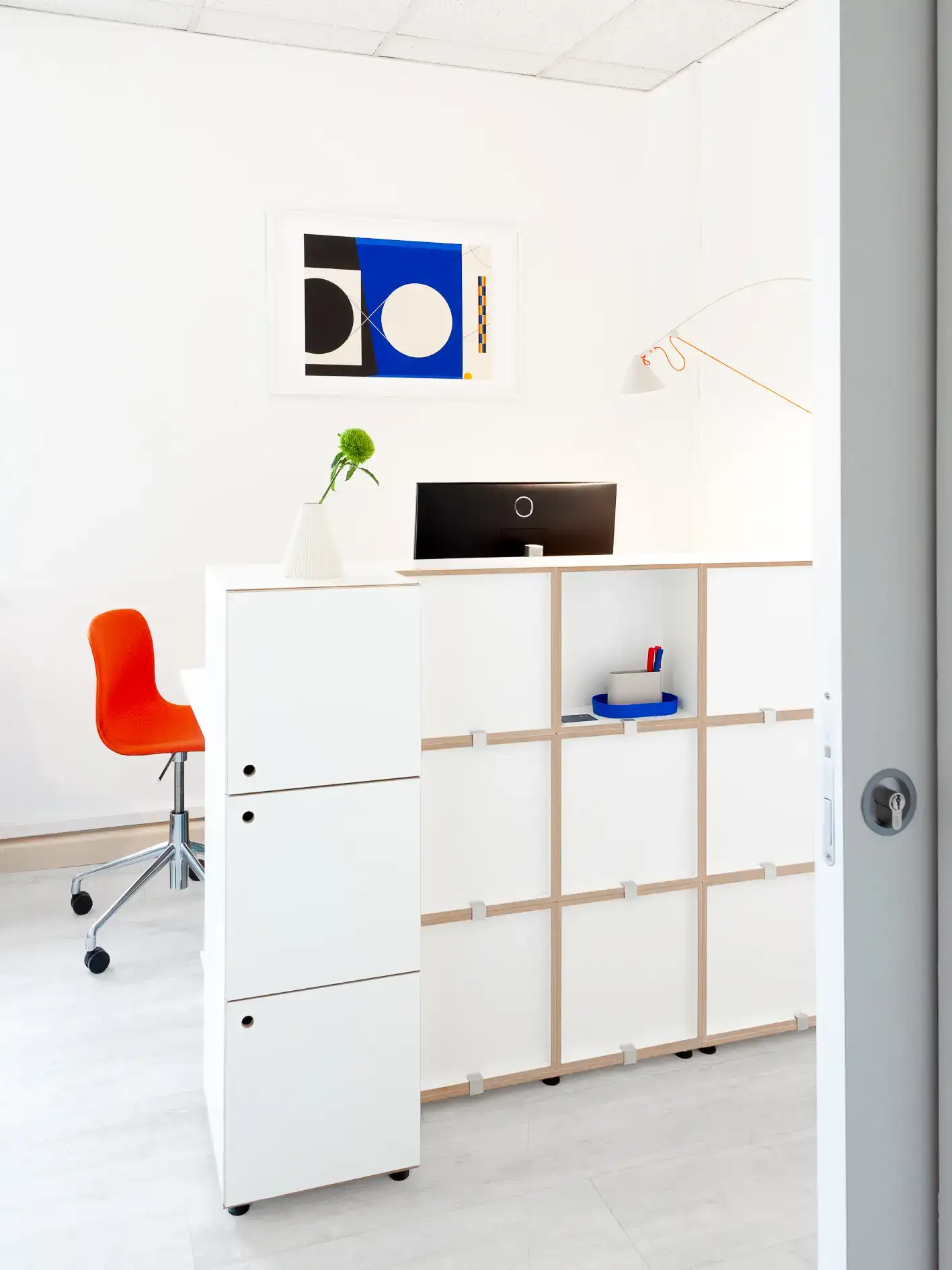
"As an architect, I’m increasingly trying to design systems rather than finished end states. This creates more possibilities in the long run and reduces resource consumption."
What would you do differently next time—with the project, the process, or the setup?
To be completely honest: Right now, there’s surprisingly little I’d change.
This was one of the first projects I completed after founding büro jutro, and I look back on it fondly. Everyone involved worked together in a very solution-oriented way—from the municipality as the landlord, to the building owner and the contractors, all the way to stocubo. Especially on projects with tight deadlines, I value good communication and smooth execution.
What does good design mean to you? Especially in a context that isn't immediately associated with aesthetics?
For me, functionality is the top priority. I like solutions that are versatile and don’t serve just a single purpose.
I find the manufacturing process just as important. What won me over about stocubo was their made-to-order production and the fact that they manufacture in Berlin—two aspects that I find particularly noteworthy today. That aligns very well with my understanding of good design.
How did the doctor react to the results?
The result came as no surprise to her, because we worked very closely together throughout the entire process. That made me all the more pleased that she immediately felt at home in the new space.
I was especially pleased by the positive feedback from the patients. That shows me that the space is working.
General Practice with a House Pharmacy
Project
General Practice Office with a First-Aid Kit
Location
Schleinbach, Lower Austria
Implementation
2025
Planning
Instagram: @buerojutro
Use of stocubo Modules
Storage space (open & closed), reception desk, room divider
Photos
©Olga Muskała