

After extensive development, we are thrilled to present the result: our new click-in shelving unit! Zero waste, made entirely from our own production offcuts.
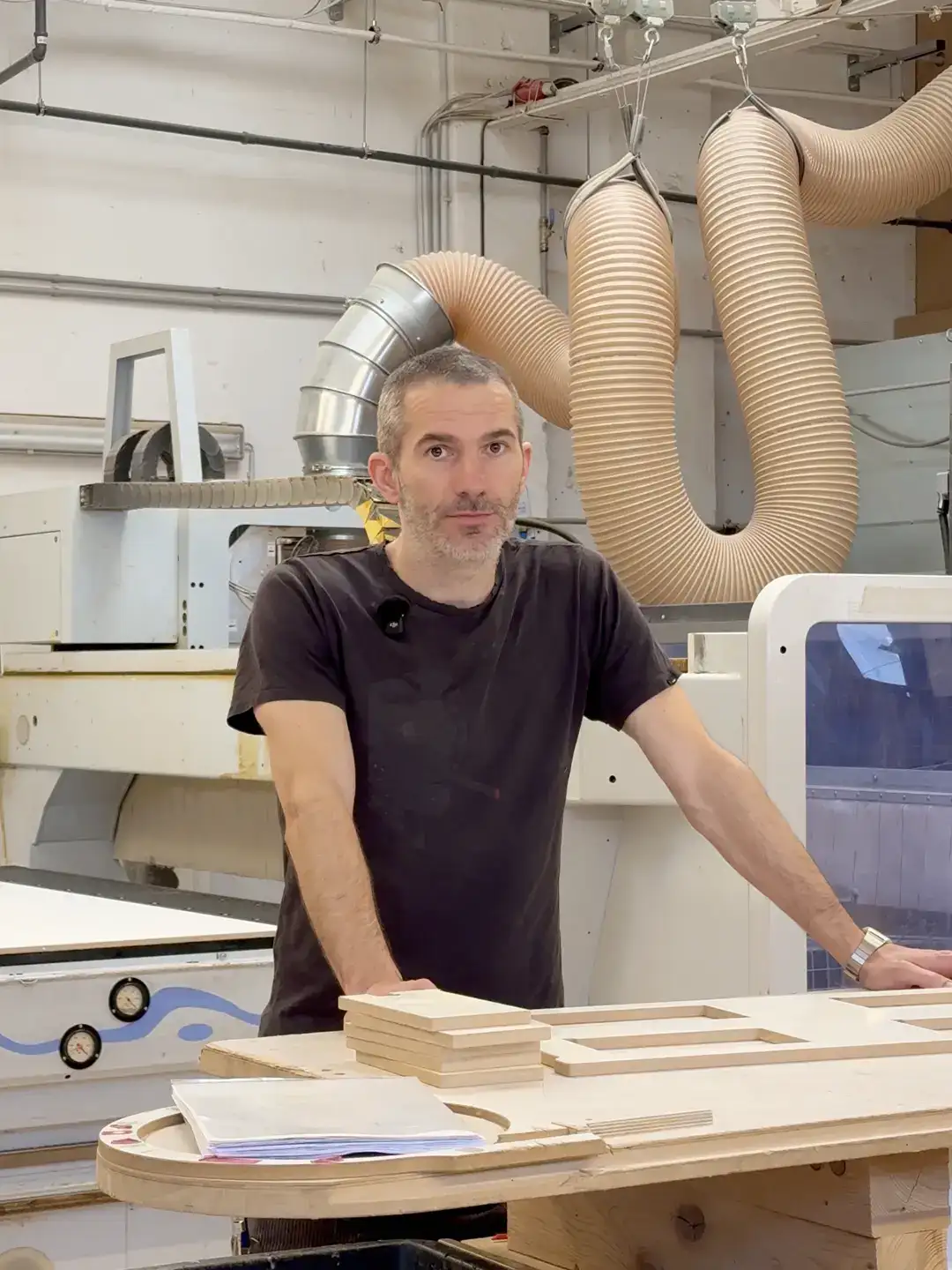
But how does a pile of MDF strips actually turn into a real piece of designer furniture? To find out, we simply took a look around the workshop and talked to our product designer, Uli, about the exciting development process.
How did the idea for the new click-in shelf come about in the first place?
At first, it wasn’t at all clear that it would become a shelf. In a woodworking shop, waste, so-called offcuts, is inevitable. This usually amounts to 15–20%. Reducing this waste and reusing it was the real motivation. And yes, it was obvious, of course, that it would become a shelf – or at least a piece of furniture (smiles).
How did the development process unfold in the workshop?
First, we produced a lot of sketches and drafts. Then, at some point, we created an initial technical drawing for a functional model. The production manager then took over the programming for the CNC machine. Using the model, we were able to identify which dimensions needed to be corrected or adjusted. We were also able to evaluate the proportions and finalize the dimensions. In total, we created about 15–20 preliminary models and prototypes.
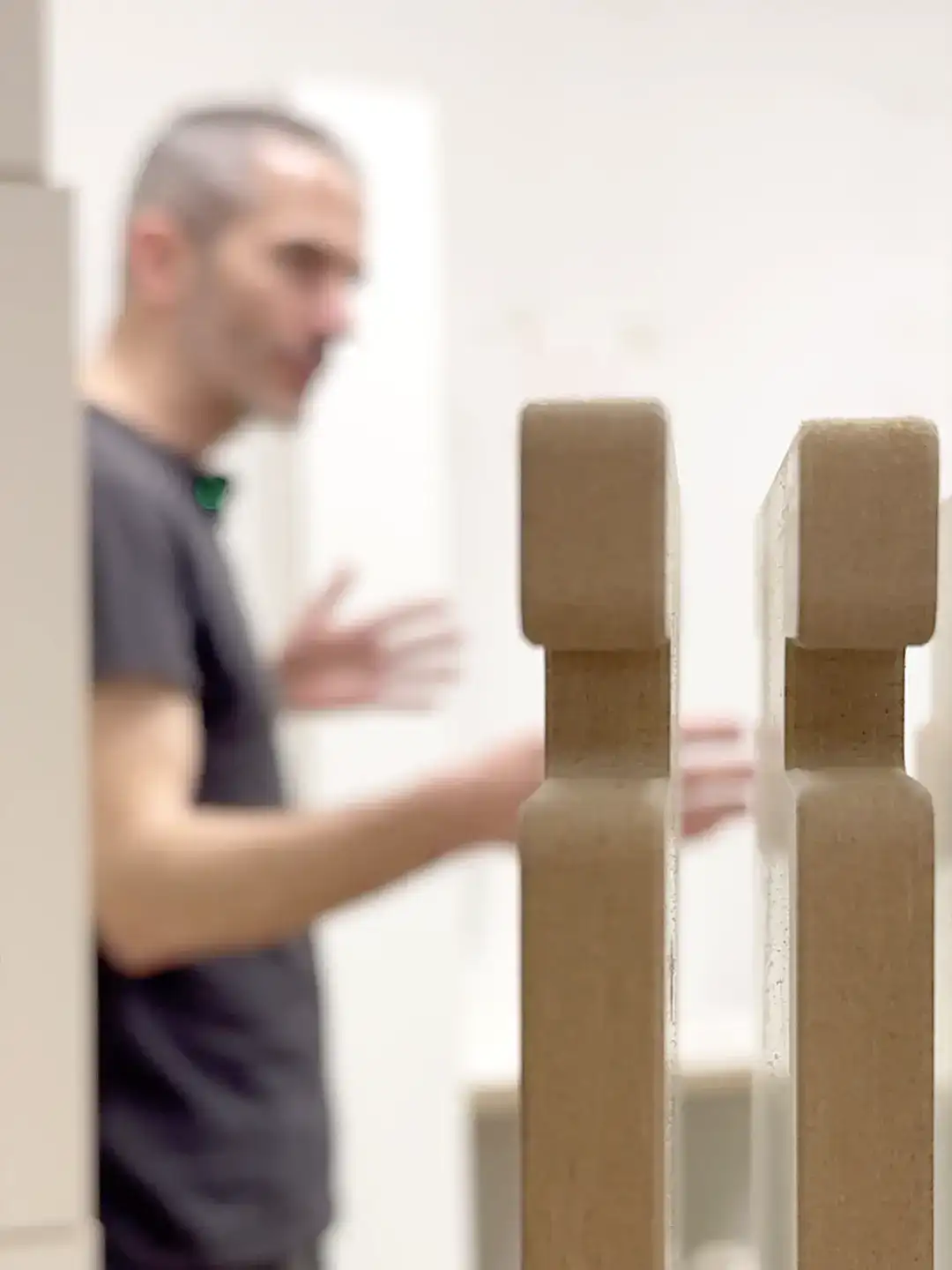
"In a woodworking shop, waste, so-called offcuts, is inevitable. This usually amounts to 15–20%. Reducing this waste and reusing it was the real motivation."
Now that the shelf is finished, you immediately notice how slim it is. Why was it designed with exactly these dimensions?
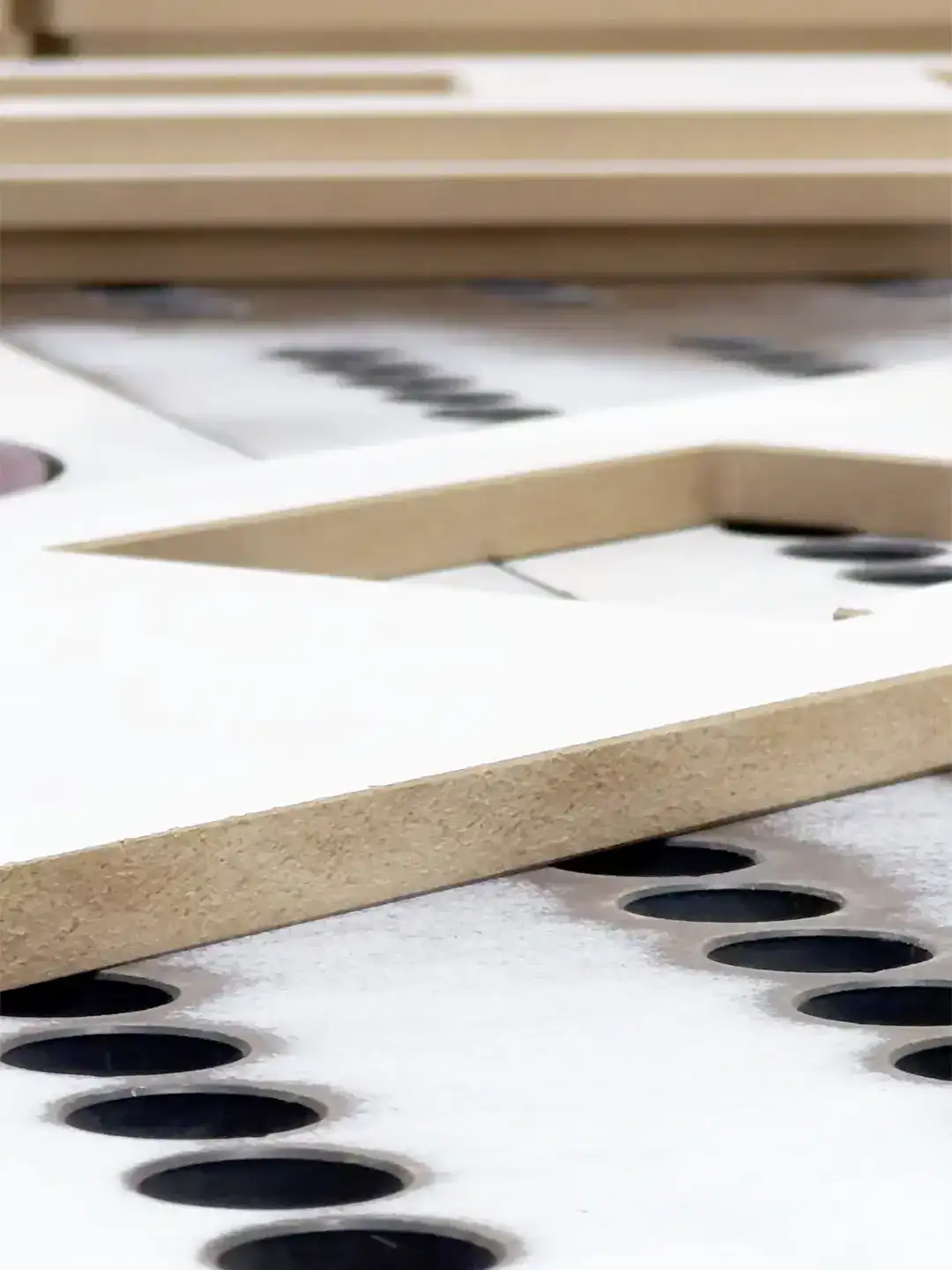
The dimensions are not defined “freely,” but were primarily determined by the offcuts generated during production. The pieces have a maximum width of about 20 cm. Since each piece is reformatted, the shelf could be no more than 19 cm deep, even though a little more depth would certainly be desirable.
When it comes to a screwless assembly system, many people’s first thought is, “Will it even hold?” How did you make sure the shelf is completely stable despite its simple assembly?
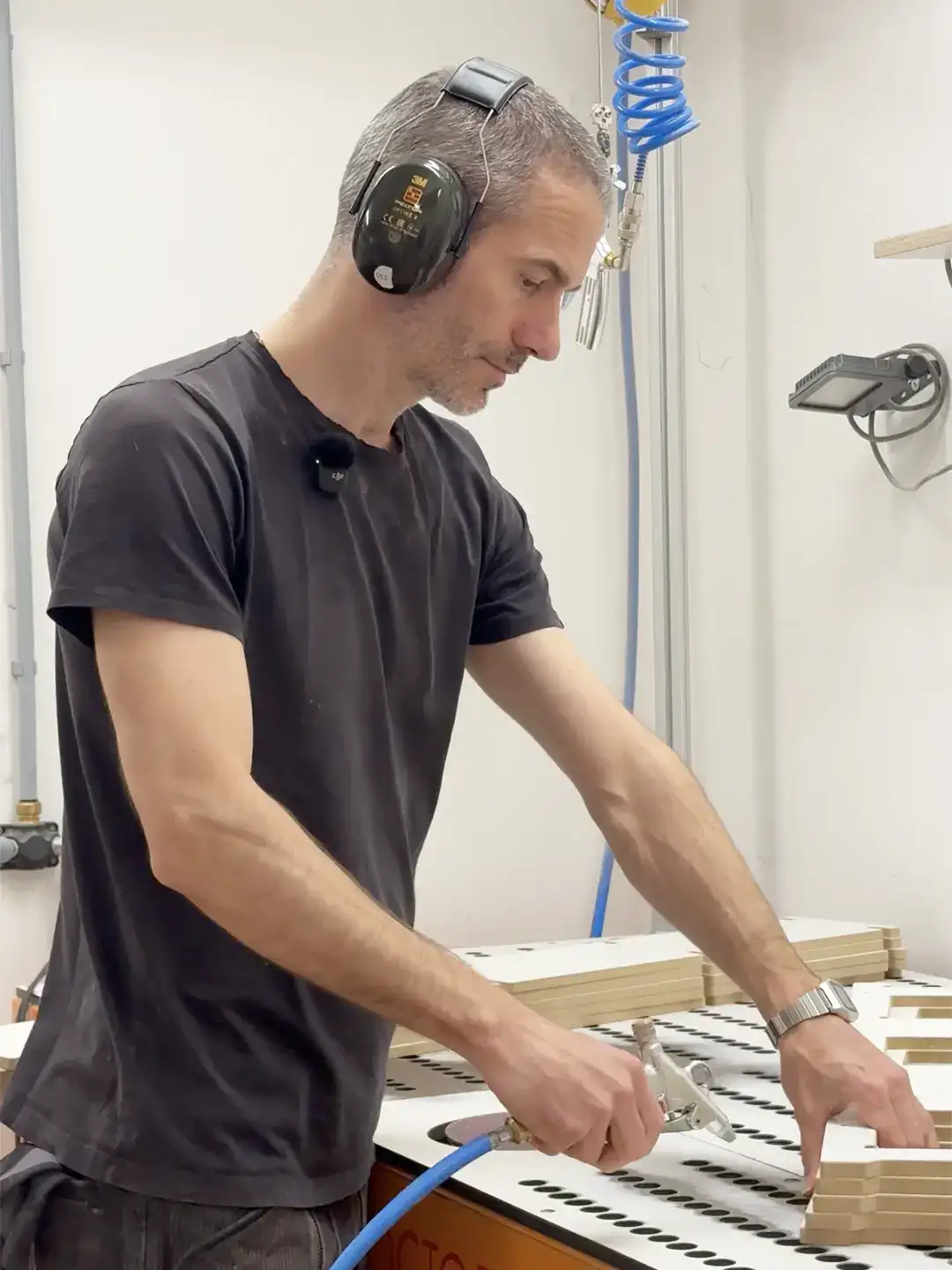
Well, it doesn't really work without any screws at all (smiles). The click-in connections between the sides and shelves primarily define the layout and grid. Longitudinal bracing is provided by the diagonal braces, which, with the help of sleeve nuts and short screws, ensure that the shelf remains dimensionally stable.
Would you say the new click-in shelf is typical of your design style?
No, I wouldn't say that. The shelf's form was primarily defined by external factors (sections). I focused more on the design, feasibility, and harmonious proportions. That's often the case. External conditions play a major role in shaping a product.
You've been working as a product designer for a long time now. What do you find most fascinating about working with wood and furniture in general?
Good question! Sometimes I’m not quite sure myself. (smiles) I was already designing and building small pieces of furniture as a child. I think it was mainly formative moments in my childhood that left me with, so to speak, “no other choice.” Sure, wood is a natural product – warm and alive. It definitely appeals to me more than steel or plastic. Today, I believe above all that furniture is an important companion in life – one that, ideally, can make life a little “more beautiful.”
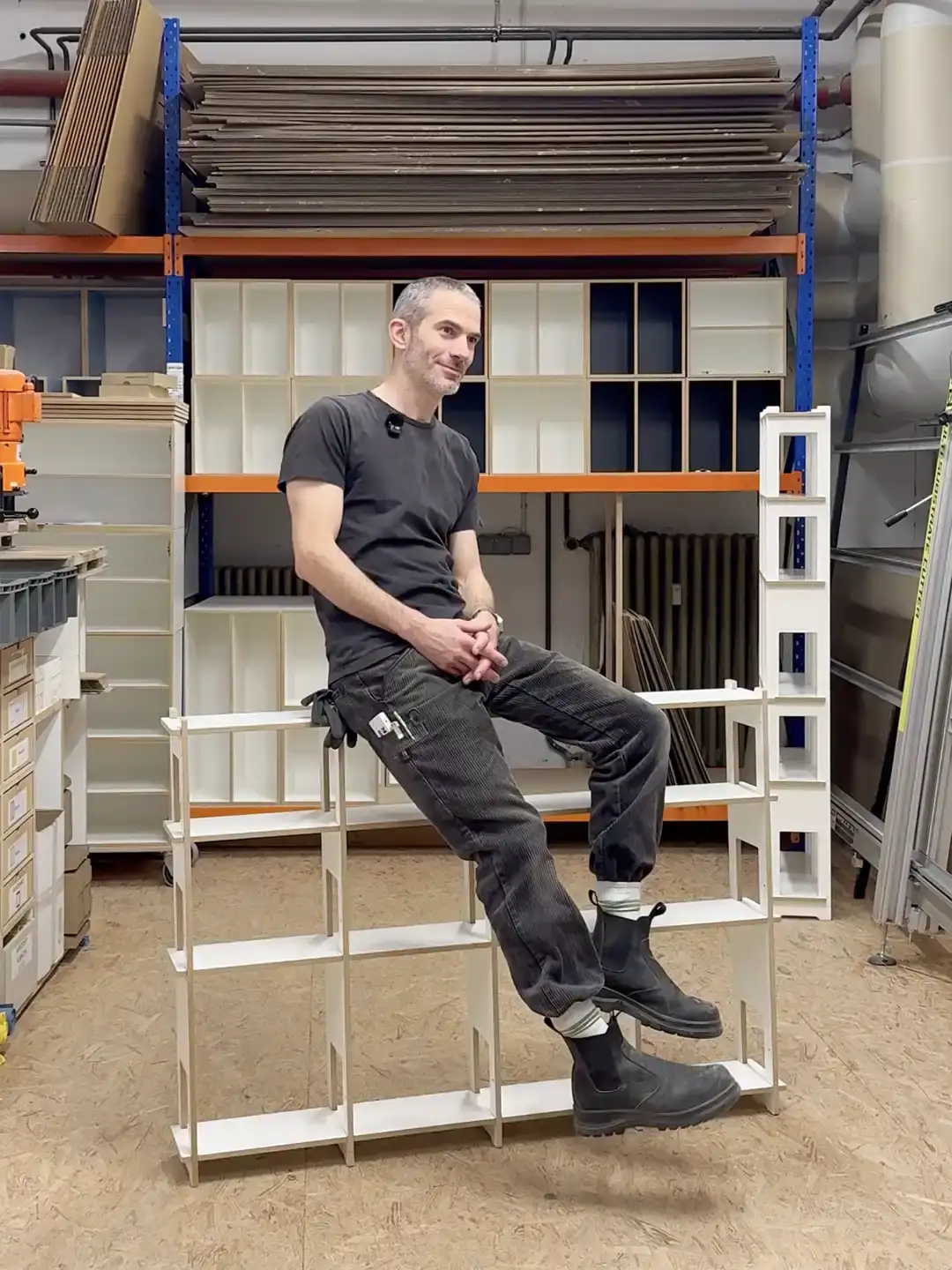
"I was already designing and building small pieces of furniture as a child. I think it was mainly formative moments in my childhood that left me with, so to speak, “no other choice."
Already seen the new stocubo click-in shelf?